CHROMAPhoto Series
202411 Artworks

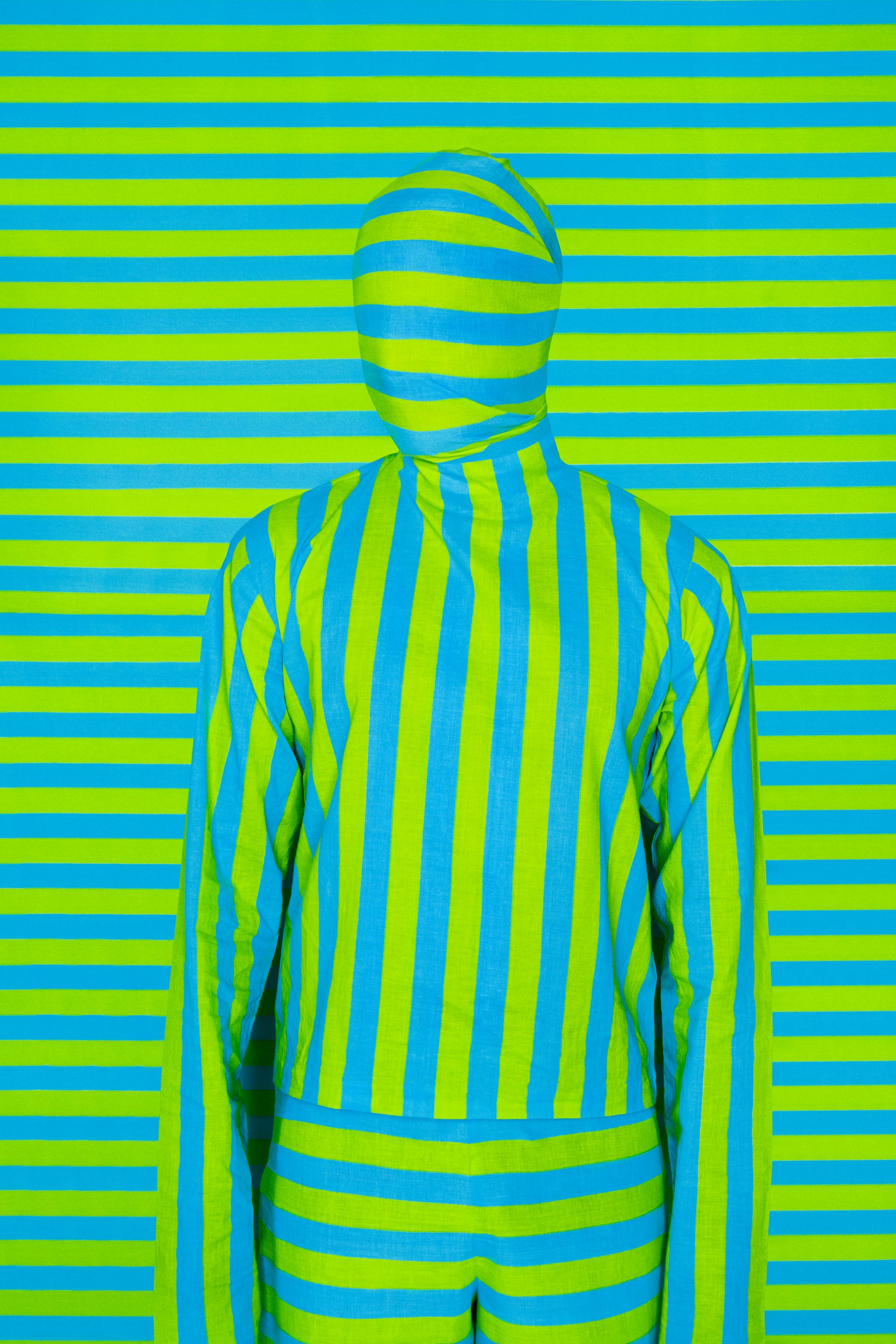
NRZ, 2025
CHROMA (1985-2025) takes shape within the rapid evolution of digital life—across a generation that has learned to move fluidly between physical and virtual worlds. From cassette tapes and early video games to searchable directories, mobile devices, and artificial intelligence, systems of mediation have continually reshaped how images, sound, memory, and identity are produced and stored. Living through these shifts has required constant adaptation, as older formats dissolve and new interfaces become second nature.
The works in CHROMA engage this condition of continual translation. Figures appear suspended within fields of saturated color and linear structure, hovering between two-dimensional image and three-dimensional presence. The body is not erased but reconfigured—flattened into signal, stretched across a grid, or compressed into code. What emerges resembles an avatar: familiar yet unstable, human yet mediated.
Titles drawn from foundational digital terms—NRZ, BIT, DAT, KEY, Channel Status—refer to early systems that continue to underpin contemporary technologies. These terms persist even as devices evolve, forming a quiet infrastructure beneath today’s accelerated digital environments. Within the works, color replaces texture and pattern, producing visual tension that mirrors the instability of perception in digital space.
As technology advances toward artificial intelligence and generative systems, distinctions between original and replica, human and machine, physical and virtual become increasingly fluid. CHROMA does not attempt to define what is real, but instead reflects a condition in which multiple realities coexist. The digital is not positioned as false or secondary; it may, in some ways, be more revealing—allowing anonymity, projection, and multiplicity to surface without the constraints of the physical world.
At the same time, the work remains attentive to the persistence of the human body. Color vibrates like sound. Lines suggest rhythm and interruption. Sensation precedes interpretation. CHROMA asks where perception now takes place—within screens, within networks, within bodies—and whether the question of “what is real” still holds the weight it once did. Rather than offering certainty, the series inhabits the threshold where human experience and digital existence overlap, blur, and continue to evolve.