NOOKPhoto Series
20236 Artworks

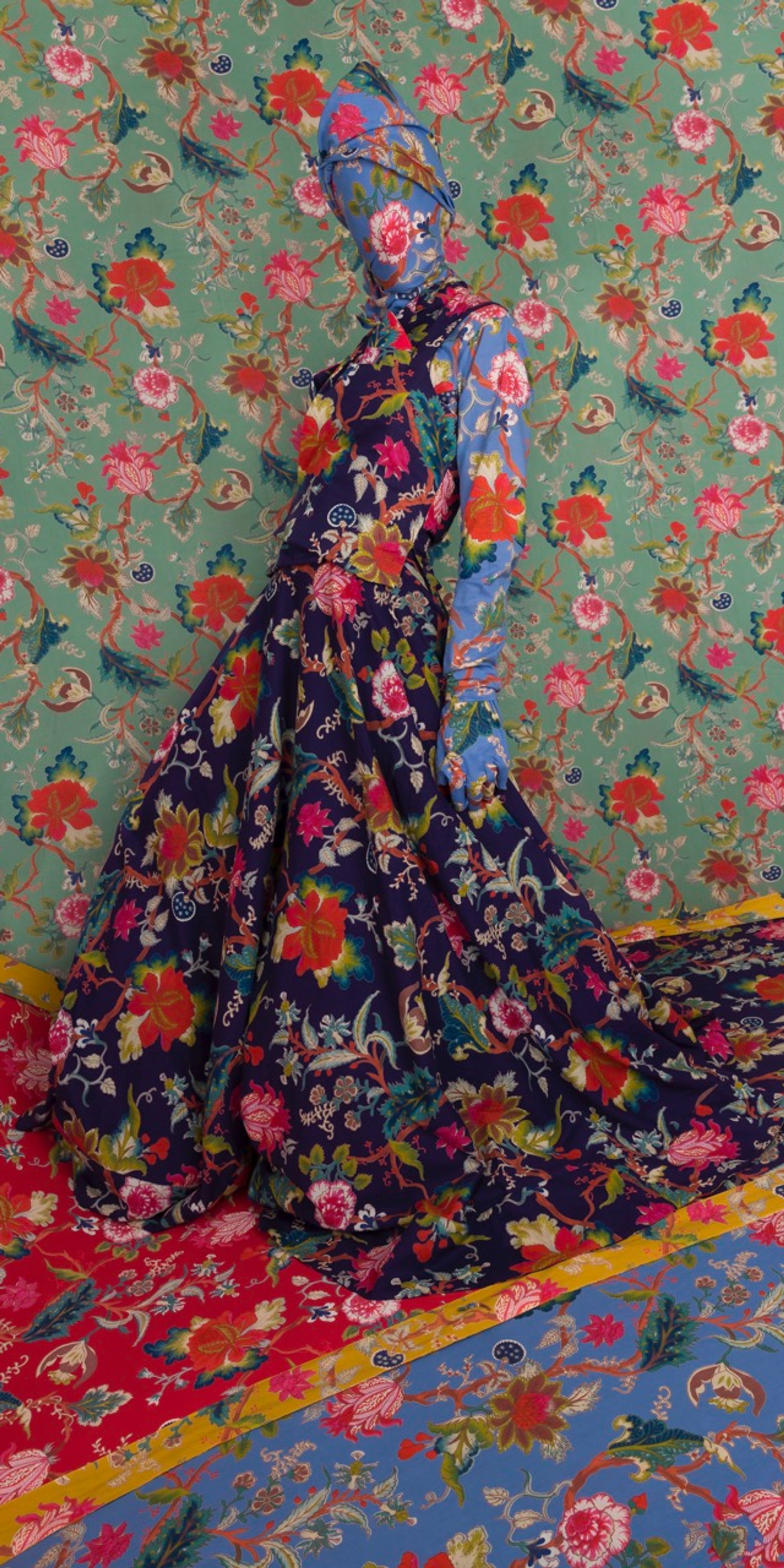
Legend, 2023
Yemen has long been renowned for its honey. At birth, honey was placed beneath our lips so that the first taste of life would be sweet, binding us— from our first breath— to the sweetness of our land.
NOOK (2023) evokes the experience of diaspora. It draws attention to those whose existence requires carving out spaces of identity—individual, self-made sanctuaries of retreat. For some of us, this is not a luxury but a necessity.
The title NOOK refers to sublime places: havens, corners of safety. These may be solitary moments at a table, in corridor-lined passageways where we pause to people-watch, meditating on where and how we fit. They may be glimpses through bus or airplane windows, suspended in the clouds—both mentally and physically. These reflections are aspirational in themselves.
Then there are reconstructions—mental and physical—of nostalgia and dual existence. We remember and re-remember, learning how to hold on and how to let go, knowing that what we recall is only the most recent version of a memory, already in the process of slipping away. In response, we anchor ourselves with objects: photographs to mark moments, maps to mark places, songs to mark emotion. In this way, we arrive at lives that are not dual, but multi-layered—held simultaneously, all at once.
The series is composed of six images that function together, both linearly and cyclically, forming a portrait of layered existence. The characters—the -cludes—are either included or excluded. But where does that leave us? Must our power be drawn from one culture or another? Or is our truest agency found in choosing seclusion, shaping identity through forces no other than our own?
Together, the portraits create a constellation: Wanderlust, Legend, East, West, Fragment I, and Fragment II. Wanderlust depicts a seated figure—childlike, hopeful, anticipatory—poised at the edge of departure. Legend introduces direction and choice: a woman in motion, moving from right to left, from east to west. Emotion becomes motion. She glides forward, her torso angled with confidence yet tugged by the gravity of leaving, her feet already leading her onward.
The sequence continues with East: a semi-reclining figure in a kurta, loose trousers flowing into a field of yellow—warm light, ochre sunsets. West follows: perched on a chair, dressed in straight-leg trousers and a shirt, pale-faced, cloth cascading like long, loose blond hair. East and West may stand side by side, or be divided by Legend, who orients and re-orients.
Finally, Fragment I and Fragment II form a diptych—two halves of a body that echo the condition of diaspora. Fragment I presents the torso in a floral-patterned garment. Only when the viewer encounters Fragment II does the dress reveal itself as Asian: the kurta too long to be a shirt, the trousers too full to be Western.
The printed fabrics were custom-made to resemble a dress worn by my Yemeni grandmother. The garments were tailored to fuse east and west. I come from two nations that no longer exist—South Yemen and Yugoslavia. My blood is Yemeni and Bosnian. I was born in Austria. I hold Yemeni and U.S. passports. I cannot ignore that my education came through British and American institutions—colonizers of my past—and that my right to citizenship was shaped by Saudi and American powers who have invaded my homeland.
Yet, when I hold my two passports—the black (Yemeni) and the blue (American)—both embossed with eagles, one opening from the left and the other from the right, I understand something clearly. One has given me everything I come from. The other has given me everything I have chosen to be.
With the blue passport, I can travel, be evacuated, speak, choose. And still, while my body exists in one place, my mind may inhabit another, and my soul holds both together.
NOOK confronts questions of citizenship, belonging, and identity by offering a counter-narrative. The empirical measures of citizenship are arbitrary—structures of power that presume hierarchy. Migrants and multinationals are often seen as incomplete, fractured.
But we are not less.
There is more than.