POPPYPhoto Series
20236 Artworks

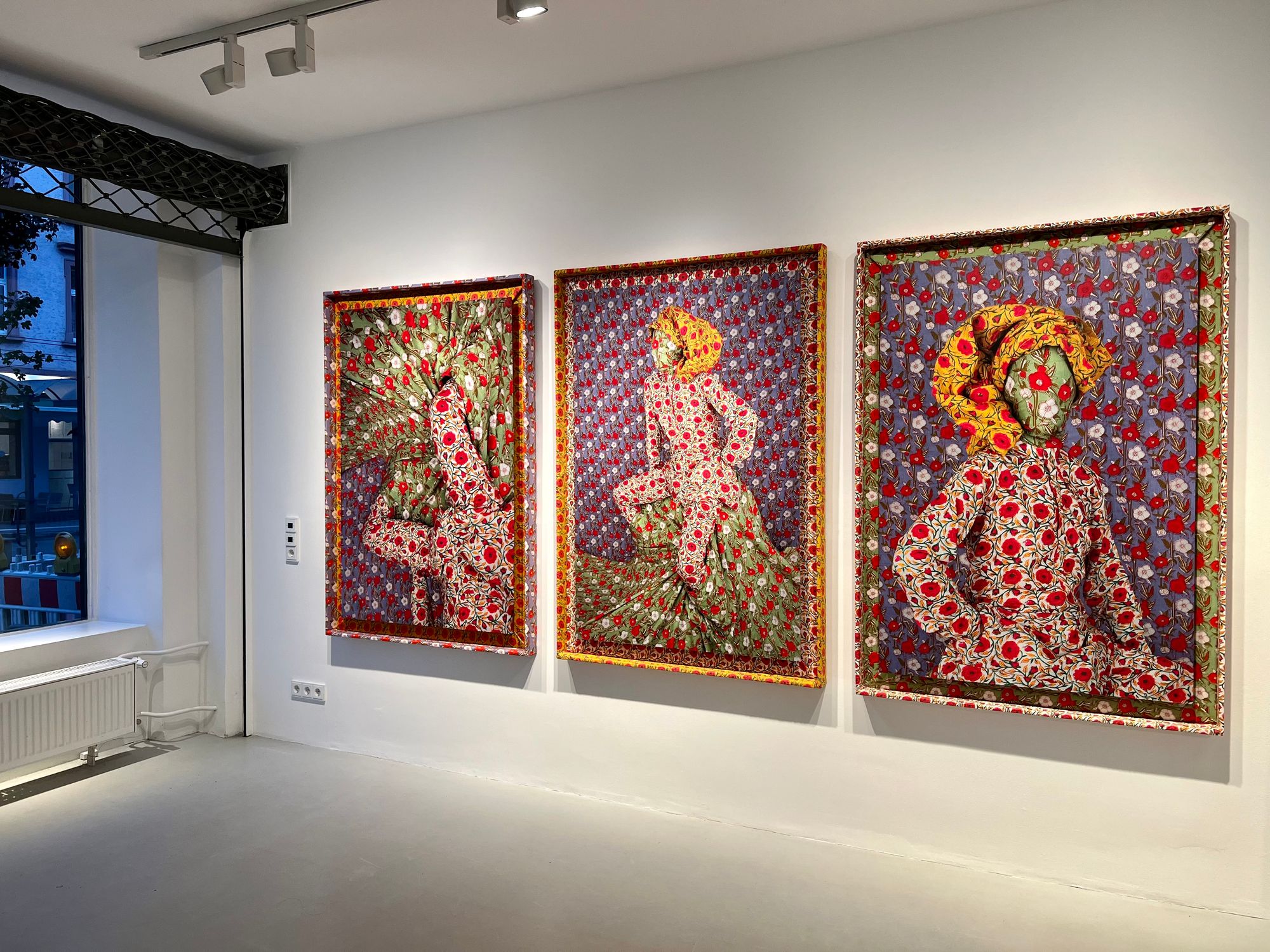
Posing in Pop, 2023
This work emerges from war—not as spectacle, but as transformation. War alters how places are seen, how people are named, and how bodies are valued. Regions collapse into war zones. Cultures flatten into headlines. And those sent to fight—those asked to protect—are changed alongside the lands they enter.
Certain places stop being places. “’Nam” no longer refers to centuries of Vietnamese history, but to a wound. Iraq becomes a moment in time, mispronounced, reduced to a political era. Yemen, Syria, Afghanistan, Palestine—names once dense with culture, language, food, ritual—are stripped down to images of devastation. Dust-toned palettes. Bodies. Weapons. Flags. Grief.
War creates a pause in history. A rupture where culture is no longer read as living, but as collateral.
And yet, these places are not empty. They are full. Full of people who understand protection, preservation, and responsibility. In Yemen, we are tribal people. War is not metaphor. It is not abstraction. It is not something to be played with. Protection is not occupation. Preservation is not control.
Militaries, however, operate through occupation—of land, yes, but also of bodies.
This occupation does not stop at borders. It follows soldiers home.
From a North American perspective, Vietnam marked one of the first collective reckonings with the veteran as casualty. Enlistment is rarely neutral. Those who serve are often people of color, people from economically marginalized communities, those for whom education or stability is inaccessible. They enlist not for conquest, but for survival, pride, purpose—trained to believe in protection, sent to enact occupation.
One image in this series, Posing in Pop, captures the moment before departure: optimism, posture, belief. Portraits are taken. Numbers are assigned. Identity becomes function. Culture—both theirs and that of the places they are sent to—is absent. In erasing others, something of themselves is also erased. A contradiction forms: the promise of valor against the reality of constraint.
The poppy carries this contradiction.
It is worn as a symbol of honor. A gesture of remembrance. And it is also the origin of opiates. When veterans return, many enter a system unable—or unwilling—to hold them. Care becomes prescription. Trauma is managed chemically. Bodies already occupied by war are occupied again: by dependency, by addiction, by silence. Heroin. Fentanyl. Opiates. The poppy, once more.
This is not irony. It is structure.
In Drown in My Eyes of Poppies, the face dissolves until a single poppy-eye remains—seductive, overwhelming, impossible to look away from. In Stranded in the Sea of Eye-Popping Poppies, the body is suspended without orientation. The image can hang any way. Is the figure floating, falling, or drowning? The violence lies in not knowing—because not knowing is often the point.
The works in POPPY consider what it means to be turned into a product of war. Veterans are celebrated in abstraction and abandoned in reality. Once visible, they become invisible. They live with PTSD, isolation, displacement—unhoused, institutionalized, forgotten. Some survive and are left to decay. Others return in coffins, wrapped in flags.
This body of work is not an indictment of individuals. It is a love letter and a warning. To those who serve. To those whose lands are occupied. To those who understand that protection requires care, accountability, and relationship—not domination.
War does not end when the fighting stops.
It migrates—into memory, into policy, into bodies.
And it blooms, again and again, in red.